
Our April Speaker:
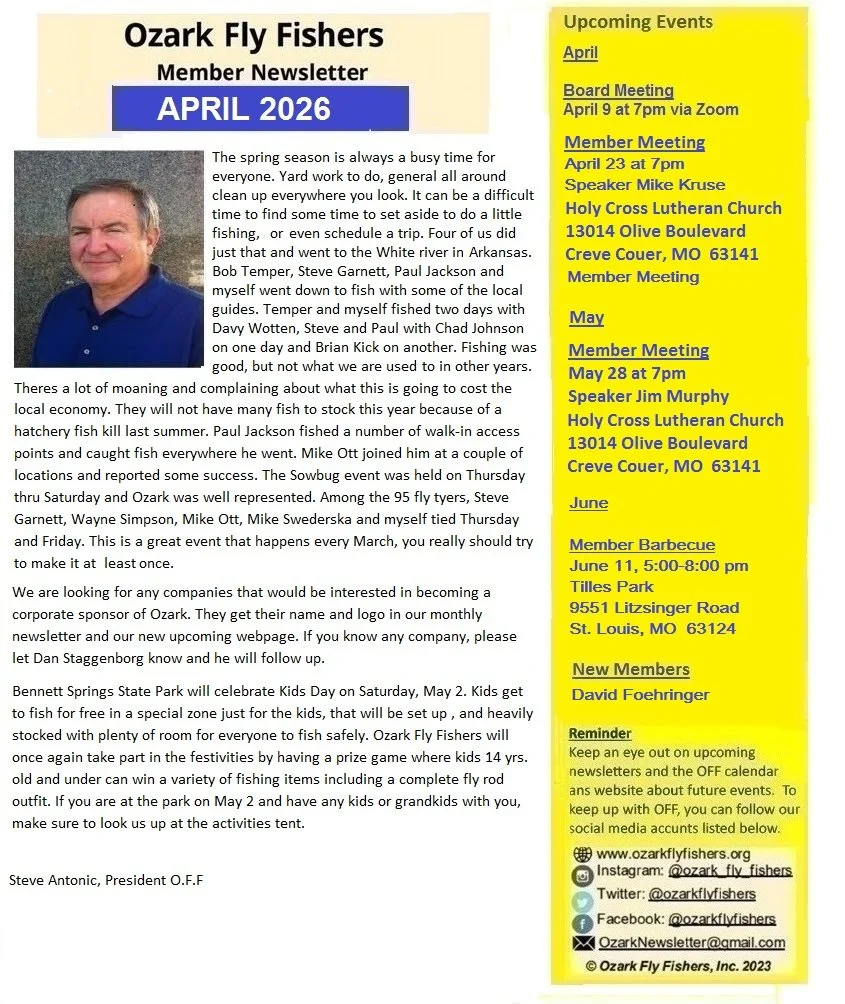
Mike Kruse had a successful career as a fisheries research biologist with the Missouri Department of Conservation. He studied fish in most of the aquatic habitats in Missouri, helped establish the fish management strategies for most of Missouri’s trout waters, and conducted research on Missouri’s smallmouth rivers, large reservoirs and small ponds.
After retiring from MDC, he taught fisheries biology classes at the University of Missouri for 9 years and in his spare time, fly fished all over North America, New Zealand and Europe. Along the way he met some of the world’s best trout anglers and was invited to be an official in the World Fly Fishing Championships held in Vail Colorado in 2016.
For the Ozark Fly Fisher on April 23, Mike will present a recent presentation that he gave at the 2025 Midwest Fish and Wildlife Conference, a Historical Perspectives on Trout Management in Missouri. Mike believes that the history of trout management in Missouri is still very relevant and provides a good background for a follow-up conversation about today's issues
BOB HEINE AUTO ACCIDENT
Our fellow angler, Bob Heine, is currently hospitalized in Springfield, MO due to a serious auto accident which occurred on March 1st. When his recovery allows, his family plans to move him to a St. Louis hospital. Bob’s family has been keeping me informed of his condition. Ozark members are welcome to call me to check on his progress. The family relates that Bob will be on a long road to recovery. Please keep Bob in your prayers. – Scott Darrough: 314-560-133
Upcoming Events
Here are the upcoming events. Note the section in bold which has changed slightly.
April 23 - Mike Kruse, Trout Fishing Guide 7pm to 9 pm Holy Cross Lutheran Church 13014 Olive Blvd, Creve Coeur
May 28- Jim Murphy's Drift Boat Build 7pm to 9 pm Holy Cross Lutheran Church 13014 Olive Blvd, Creve Coeur
June 11 - Member Barbecue Tilles Park 5pm to 8pm
July 11 – Blake Stephens, MDC Fisheries – Current River, Eleven Point, and Crane Creek, 7pm to 9 pm Holy Cross Lutheran Church 13014 Olive Blvd, Creve Coeur
August 27 – TBD
September 24 – Nick Lamey, MDC Fisheries – Little Piney and Mill Creek, 7pm to 9 pm Holy Cross Lutheran Church 13014 Olive Blvd, Creve Coeur
October 22 – Chad Johnson, a White River AR guide dry fly fishing on the White, 7 pm to 9 pm Holy Cross Lutheran Church 13014 Olive Blvd, Creve Coeur
Thanks, Paul Jackson
Fly Casting Tip:
Four things that will improve your casting.
1) Start low and start slow
2) Pause too long on the back cast NOT too little
3) Use a loose rod grip to start then squeeze the grip at the hand stop position.
Do this on both the fore and the back cast.
4) Practice should have a purpose. It is best to isolate a particular principal / skill to work on. Make your sessions 15 minutes every day or every other day.
Start low - when you begin your cast the rod tip should be on the ground or on the water. Six inches above either is significantly too much. Make this become a habit. This can be a purpose for practice sessions.
Start slow – lift the rod inch by inch (literally), without bending the wrist. When the fly line / leader junction starts to move begin to increase your speed, going faster and faster until you reach the rod hand stop position. Starting low and slow will prevent slack in your line and help with correct application of power.
Pausing too little on the backcast will cause slack, often resulting in no loop or a tailing loop. Pausing too long may cause the line to hit the ground or water behind you. However, you can still make a good cast assuming the fly does not snag something.
A hard stop, caused by squeezing the grip, is needed for proper cast. The reason for squeezing is to improve the stop.
Find the weakest link in your casting and isolate that skill in your practice sessions.
For example, if timing is the problem intentionally make the pause too short. Observe what happens. Then lay the line out straight on the ground behind you and make a forward cast. Observe what happens. (if done correctly the cast will look great.) Then find the best timing /pause in-between the two extremes. Practice is the number one thing that will improve your casting.
Bill Armon
CONSERVATION
Scott Darrough
Ozark Fly Fishers is an affiliate of the Missouri Stream Team program, - Stream Team #31. Since its inception, Ozark Fly Fishers has been associated with numerous conservation endeavors such as stream bank stabilizations, skyhook construction, riparian tree plantings, water quality monitoring, watershed clean-ups and monetary contributions to preserve stream habitat along with education programs such as Passport to Clean Water.
ATTENTION! – OZARK FLY FISHERS NEEDS YOU!
CONSERVATION RELATED POSITIONS THAT NEED TO BE FILLED.
Ø LOWG – LEAGUE OF WATERSHED GUARDUANS BOARD MEMBER TO REPRESENT FOR OZARK FLY FISHERS.
o Dan Rasch resigned from this position after holding for several years.
Ø MISSOURI STREAM TEAM CAPTAIN FOR BLUE SPRINGS CREEK, BOURBON, MO
o Glenn Bish dedicated many years of monitoring to this location.
Ø MISSOURI STREAM TEAM CAPTAIN FOR MILL CREEK, NEWBURG, MO
o Bill Leslie dedicated many years of monitoring to this location.
Interested in filling one of these positions – contact Scott Darrough at:314-560-1335 or swdarrough@yahoo.com
EVENTS AND OPPORTUNITIES
If you have questions about the following events, contact Scott Darrough at: 314-560-1335 or swdarrough@yahoo.com
April 4, 2026: Biologic Stream Monitoring - 9:30 am - Krautmann Farm, 8095 State Road BB, Hillsboro, MO 63050 - by invitation from the Belews Creek Watershed Partnership - Stream Team 3853
Hey OFF members! Can you identify the classic aquatic organisms that fly fishers imitate? Mayflies, Stoneflies, Caddisflies, etc.…If you cannot, then here is an event that will let you do so. Whether you are versed on this subject or not, we want you to attend. This will be hands on “fun” learning - easy to comprehend. The first thing attendees need to understand about this event is that there are NO stupid questions. All questions and queries are welcome and encouraged. Questions are how we learn. We want you to learn about the awesome biodiversity in this beautiful Ozark stream. We will look at the insects, crustaceans, worms, mollusks and possibly fish inhabitants. Our nets will “tell” the story of the stream. We can also discuss the riparian plant life and the watershed in general, if there is an interest. All members and non-members are welcome. Parents are encouraged to bring their children. Depending on the number of attendees, we may deploy multiple net racks. Other Stream Teams will be invited as well. This typically is an awesome time of the year to monitor. The organisms tend to be bigger and more plentiful, as they have not yet emerged and left the stream. Waders are not necessary for those who do not have them as, the nets will be carried to dry land where we can study in comfort. Attendees will be encouraged to pluck specimens from the nets (with forceps) and place them in divided trays for better observation and identification. Please notify Scott Darrough at 314-560-1335 or swdarrough@yahoo.com if attending. Environmental conditions this time of year can be unpredictable, and the event may need to be cancelled or rescheduled. This was the case last year as the night before the event brought a tornado a few miles away tearing massive sycamores from the stream banks and obliterating homes. Also, the creek was blown out, unsafe condition to monitor. Note- there will be adequate parking. This stream is a short drive from St. Louis. Come, enjoy the camaraderie, and learn about this beautiful stream.
July 17-19,2026: 15th Annual Missouri Stream Team Outing- Montauk State Park
This event spotlights the Missouri Stream Team Program offering numerous opportunities combining the sport of fly fishing and science. Keeping with tradition, various presentations and activities are planned. Note that this year we are organizing a very special nocturnal event. We are arranging the use of lights to attract adult specimens of the larval forms that we typically observe in the stream bottom. Anyone interested in dry fly fishing will want to attend this endeavor. Currently this outing is in its planning stage. Continue to watch for upcoming details, but for now mark your calendars to save the date.
July 25, 2026: 30th Annual Watershed Celebration - Meramec State Park
- by invitation from Stream Teams United
Do not miss this “Grand Picnic”! There will be opportunities for OFF members to volunteer for casting and fly-tying instruction, tying safety pin flies and manning the Stream Team macroinvertebrate display. Lunch is provided. Experience the massive raffle. This event provides an opportunity to promote conservation and recruit new members. It is also a fun time.
August 22, 2026: 59th Annual Operation Clean Stream - Byrnes Mill City Park
- by invitation from the Trashmanian Devils Stream Team 3797
Ozark members are invited to attend this clean-up of the Meramec watershed. Details will follow in the months to come.
Fly of the Month:
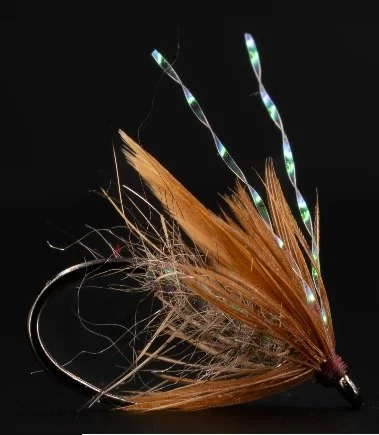
Scott Sanchez One Feather Wet Fly
I can never decide what to tie at North Arkansas Fly Fisher’s SowBug Roundup. So many good tiers, so many cool patterns, so many new techniques – It’s hard to stand out amongst it all. This year’s theme was “The Delicate Dry Fly”, but I’m not a big dry fly guy. I can tie and fish them, but I just don’t get a lot of chances to fish true traditional dry flies in Missouri. We get a lot of caddis, some BWO’s and some PMD’s, but it’s hard to dedicate a day to dry fly fishing when the nymphs and emergers work so much better.
That’s why, when I saw Fly Tying with Uncle Cheech (FlyFishFood) post this pattern on Facebook, I knew it was a winner – especially during caddis time. I love soft hackle and wet fly fishing and tying, so it was an easy choice. This fly is a little different and comes from the vise of one of the most innovative fly tyer – Scott Sanchez.
Hook: Firehole #609 or Fulling Mills #5025, or #5027 #14 - #16
Thread: Veevus 12/0 Brown or Olive
Ribbing: Pearl Crystal Flash (I used Olive and Chartreuse to match the caddis hatch)
Body: Hare’s Ear Dubbing (or color to match your hatch)
Wing/Hackle: Ginger or Brown Hen Saddle Feather
Antennae: Pearl Crystal Flash
Secure hook in vise, and start thread at the 3//4 point and wrap back to the hook bend.
Tie in one strand of crystal flash for the rib, and then dub a sparse tapered body to the ¾ point on the hook shank.
Wrap the rib behind the body on the hook shank to form a tag, and then wrap evenly spaced rib to the waiting thread.
Use a dubbing brush to rough up the dubbed body a little so the rib is still visible but thru the dubbing.
Prep your Hen Saddle feather by pulling back the fibers from the tip leaving enough feather tip long enough cover the body and extending past the hook bend.
Tie the feather in with 2 loose wraps. Pressing down with your thumb, pull the feather forward slightly so it is the same length as the hook. This allows the feather to fold around the hook a little. Secure with 2 tighter wraps.
Pull the remainder of the feather back over the fly and wrap over the base to secure it.
Return the thread to the hook eye, and make two wraps of hackle between the “wing” and the hook eye. Trim excess and for a nice neat head.
Tie in two sections of crystal flash extending back over the fly. Trim to just past the wing, finish the head, and whip finish.
Watch the video on FlyFishFood to get a better idea of how this works. I used Olive and Chartreuse ribbing to match the green caddis in Arkansas. I also used Light Olive Glimmer Thread bodies with the same hackle/wing technique. Paul Jackson and I then took these to the White River and caught quite a few fish swinging them during an early caddis hatch. Some fish took them on top while others hit them just as they started their swing. This makes a really buggy looking caddis emerger or diving caddis. Whatever the fish choose to believe…
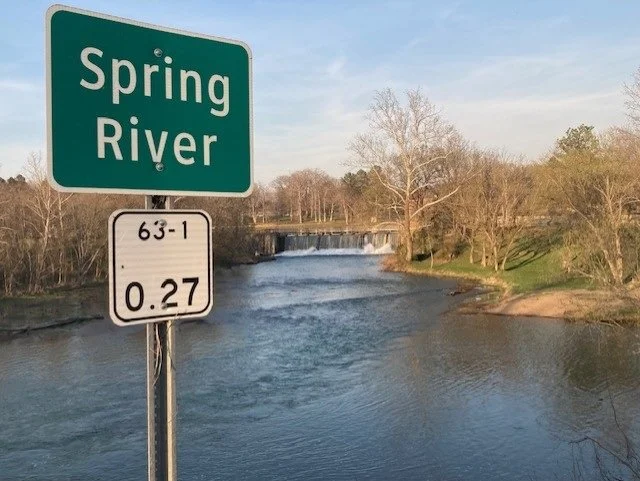
Upper Spring River Float
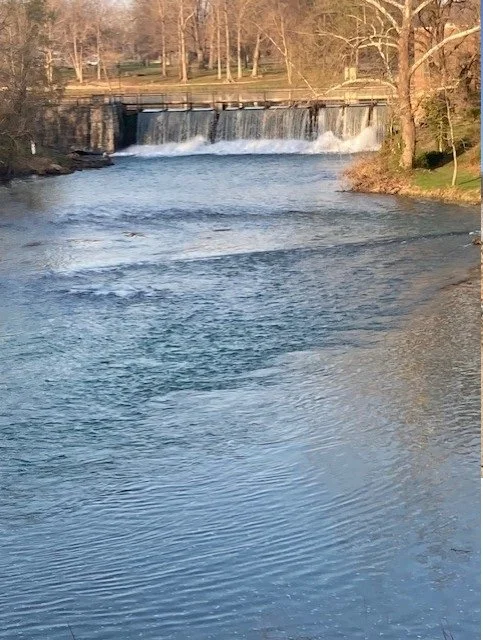
The Jim Hinkle hatchery was hard hit by that flooding and large numbers of its fish were swept into the river. The Spring flood caused a one-time super stocking event similar to drastic flooding in two Missouri hatcheries back in 11/24. Surveys after the Spring flooding indicated there were four times the normal number of fish in the river. Knowledgeable sources say the lost fish departed at Dam 3 and entered the river downstream and could not make their way upstream.
As a result, there was a reduction in stocking for months after the flood as hatcheries recovered. Now almost a year later, fishing is still very good on the Spring below and above Dam 3.
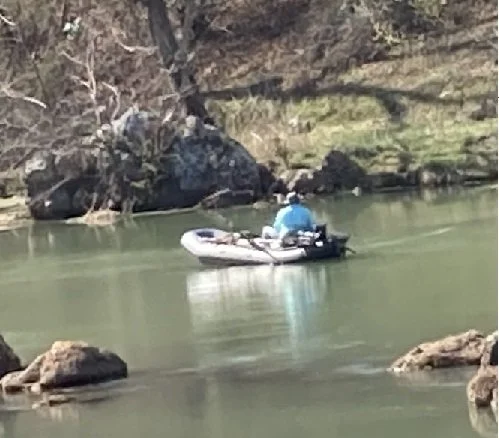
As mentioned, my excursion days ago was above the hatchery. I fished streamers for about six hours and the action was nonstop. While there are a few places to get out and wade fish on this upper section, I remained in my driftboat because of the difficulty in wading the fast current and long wades to get to the best spots. A constant 9 million gallons an hour flows from the spring and trout were in or just off to the side of that robust flow during my float.
I had great success casting streamers at 45 degree angles and stripping them back against the current. I found the right depth - an intermediate sinking line on a 6 weight rod.
Trout were active and hungry throughout that section of the river but the most frenetic activity was above and just below the Lassiter public walk-in wade fishing area. The best spots were swift holes ranging in depth from 3 to 5’. I’d quietly float down to a likely spot, anchor and stand up to apprise the water ahead. Casting far downstream and weaving the streamer back among rocks and boulders and open avenues devoid of moss and vegetation really paid off.
It must have been the warmer weather (sunny with temps reaching 86) because the trout struck with an intensity that had me gripping my rod tightly.
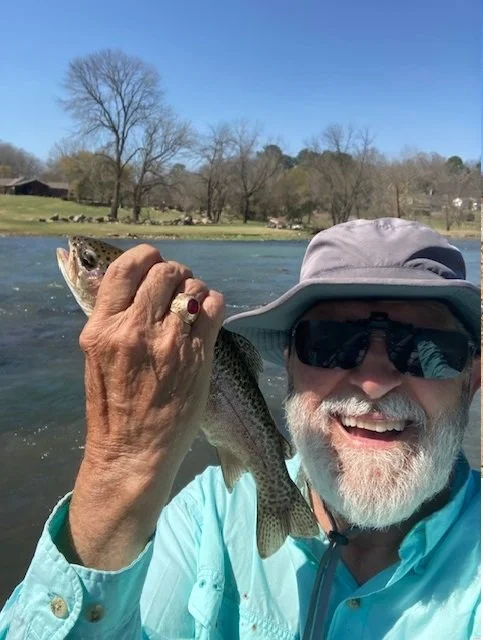
My best fish was a 19” bow but fighting these fish against the current from an anchored boat made each one feel pretty hefty and there were many that managed to throw my hook since I didn’t have a net man along. Still, I managed to net 38 on my own.
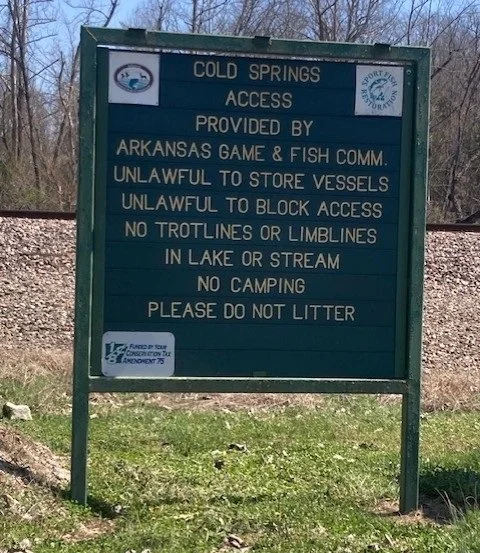
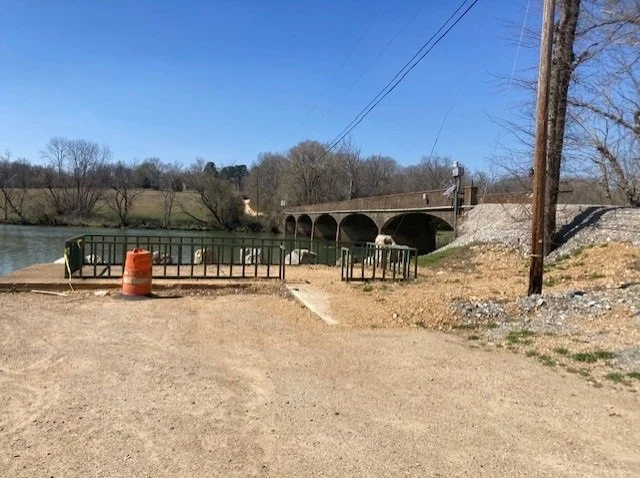
I took out at Cold Springs Access, which is being rebuilt after the flooding. In one accompanying photo, a locomotive can be seen crossing the trestle at the spots where it was destroyed last year.
Al Harper
Waterflow tables: